|
Monday, December 8, 2025
Motivational Speaker Quote | Contact for free


 Nationwide


Tuesday, December 2, 2025
APOD Email Removal Request
Thank you. You have been removed from the email distribution list for the astronomy picture of the day.
Cheers.
Greg Tracy
gtracy@gmail.com
https://apodemail.org
Notes:
APOD - M77: Spiral Galaxy with an Active Center
Astronomy Picture of the Day
Discover the cosmos! Each day a different image or photograph of our fascinating universe is featured, along with a brief explanation written by a professional astronomer.
2025-12-02
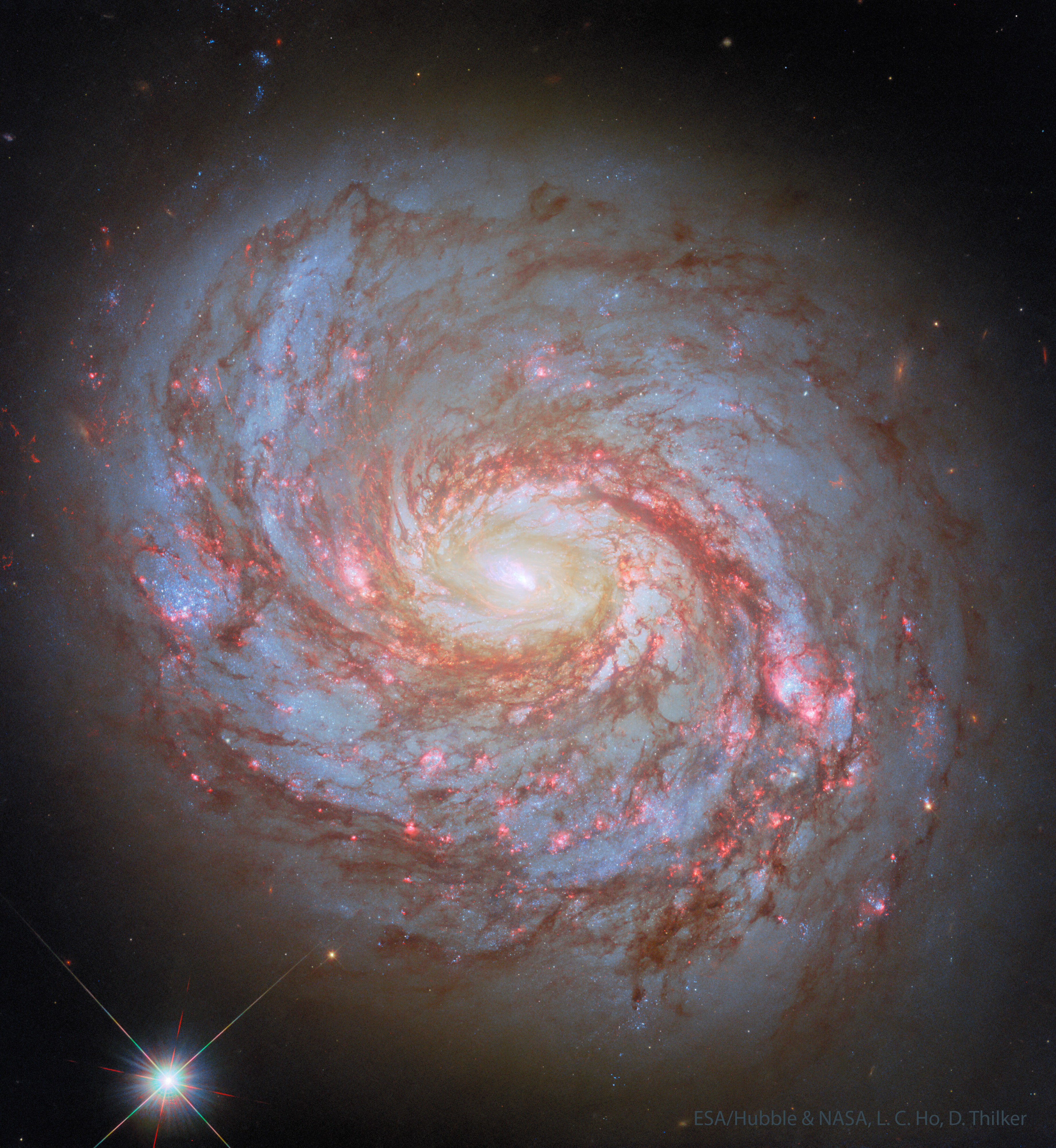
Explanation: What's happening in the center of nearby spiral galaxy M77? The face-on galaxy lies a mere 47 million light-years away toward the constellation of the Sea Monster (Cetus). At that estimated distance, this gorgeous island universe is about 100 thousand light-years across. Also known as NGC 1068, its compact and very bright core is well studied by astronomers exploring the mysteries of supermassive black holes in active Seyfert galaxies. M77's active core glows bright at x-ray, ultraviolet, visible, infrared, and radio wavelengths. The featured sharp image of M77 was taken by the Hubble Space Telescope. The image shows details of the spiral's winding spiral arms as traced by obscuring red dust clouds and blue star clusters, all circling the galaxy's bright white luminous center.
This is an automated email. If you notice any problems, just send me a note at gtracy@gmail.com. You can add and remove email addresses to this distribution list here, https://apodemail.org. Unsubscribe
Monday, December 1, 2025
APOD - 3I ATLAS: Tails of an Interstellar Comet
Astronomy Picture of the Day
Discover the cosmos! Each day a different image or photograph of our fascinating universe is featured, along with a brief explanation written by a professional astronomer.
2025-12-01

Image Credit & Copyright: Victor Sabet & Julien De Winter
Explanation: How typical is our Solar System? Studying 3I/ATLAS, a comet just passing through, is providing clues. Confirmed previous interstellar visitors include an asteroid, a comet, a meteor, and a gas wind dominated by hydrogen and helium. Comet 3I/ATLAS appears relatively normal when compared to Solar System comets, therefore providing more evidence that our Solar System is a somewhat typical star system. For example, Comet 3I/ATLAS has a broadly similar chemical composition and ejected dust. The featured image was captured last week from Texas and shows a green coma, a wandering blue-tinted ion tail likely deflected by our Sun's wind, and a slight anti-tail, all typical cometary attributes. The comet, visible with a telescope, passed its closest to the Sun in late October and will pass its closest to the Earth in mid-December, after which it will return to interstellar space and never return.
This is an automated email. If you notice any problems, just send me a note at gtracy@gmail.com. You can add and remove email addresses to this distribution list here, https://apodemail.org. Unsubscribe
Subscribe to:
Comments (Atom)